
Nepenthes 103: Habitats in the Wild
As amazing as it would be to see Nepenthes in the wild, it can be hard to fit in among the many costs and obligations of every day life. Neither of us have been able to hike to the highlands to see our favourite plants - though I hope we can in the nearer years. The biggest downside of this for me has been that, without conscious effort, the diverse range of Nepenthes can devolve into an alphabetical wish list with, if you’re lucky, countries and altitudes of origin. Due to the obvious bias towards posting zoomed photos of pitchers in sale posts and social media (of which we are entirely guilty), it’s hard not to only pitcher the pitchers when thinking through this list. There are many species that I know I’d love, but of which I could not honestly describe the size of the leaves, growth habit, or any other defining features, let alone where they would grow in the wild.
The following habitat descriptions are summarised from books such as Nepenthes of Borneo, by Charles Clarke, and Nepenthes – The Tropical Pitcher Plants, by Stewart McPherson, with insight and editing from Greg Bourke.
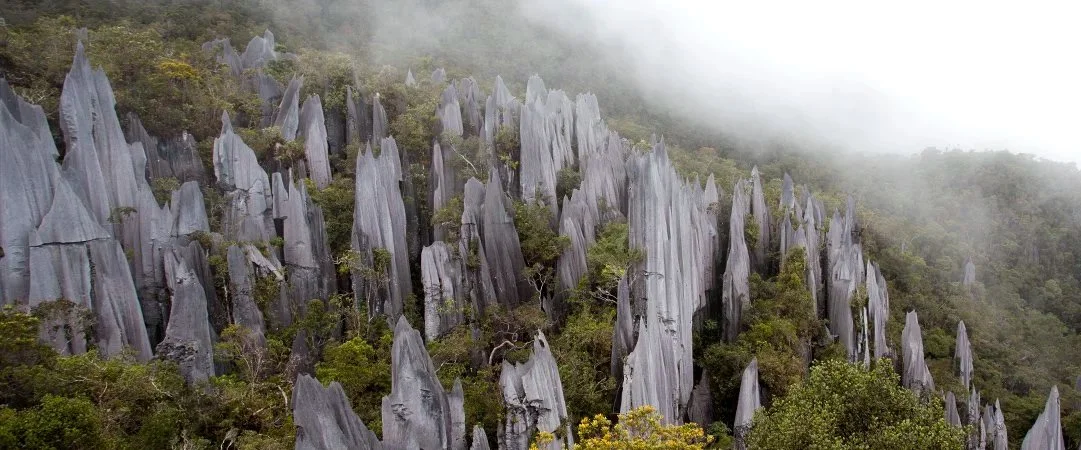
Mountain Summits and Ridges
Mountain submits and ridges are amongst the harshest tropical environments but are home to many Highland Nepenthes species. Vegetation is generally stunted or absent due to extreme environmental conditions, a lack of soil, or both. The exposed geology and lack of shielding vegetation means that even summits and ridges below 1000m can be exposed to fierce winds and rain. Nepenthes that grow in these habitats must be able to tolerate heavy fogs, rainfall, and flooding but also droughts and direct sunlight. N. alba, N. hirsute, and N. peltata are examples of Nepenthes species that will grow in these harsh conditions.
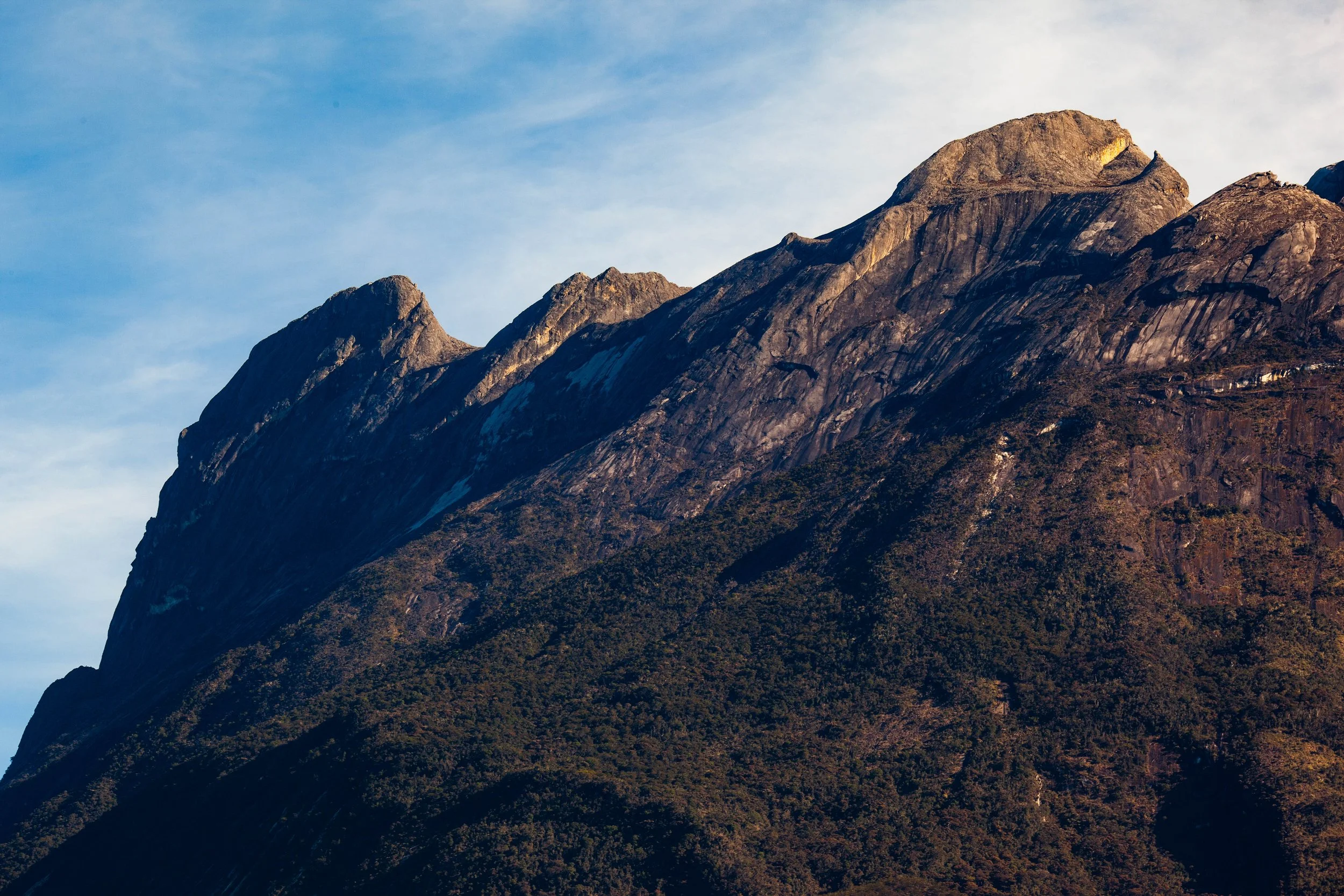
Upper Montane Scrub
Upper montane scrub generally occurs at above 2900m, where trees are replaces with scrub and heath vegetation and below 3300 m where habitat tends to become bare rock with fewer hardy shrubs. Temperature fluctuates from 27 degrees and above during the day and down to a few degrees above 0 at night. Few species extend to these habitats, but they are some of my favourites; N. lamii, and N. villosa.
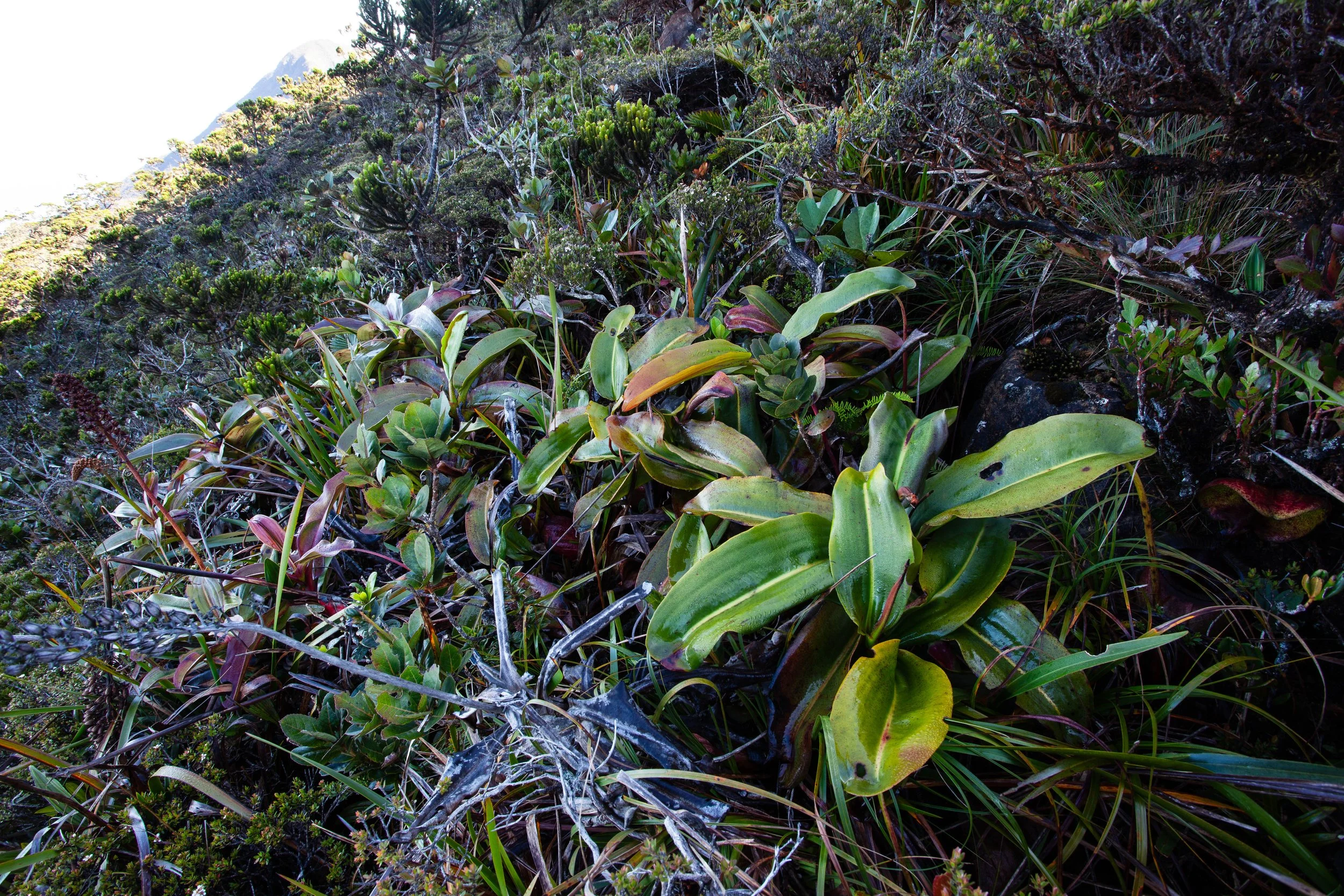
Upper Montane Forests
Upper montane forest is characterised by a shorter canopy of around 10m tall, decreasing in height as elevation increases. These forests are cooler, mistier, and generally covered in moss. Temperatures are below 25 degrees during the day and above 6 degrees. Temperatures have high fluctuations within the day and night, but averages are consistent throughout the seasons and year. The substrate is rich, peaty, acidic and wet, but the top layer will dry out in open areas. Nepenthes in this habitat generally grow terrestrially in little or no shade, though the mist does shield the plants from direct sun for many (but not all) hours of the day. Species such as N. lowii and N. macrophylla.
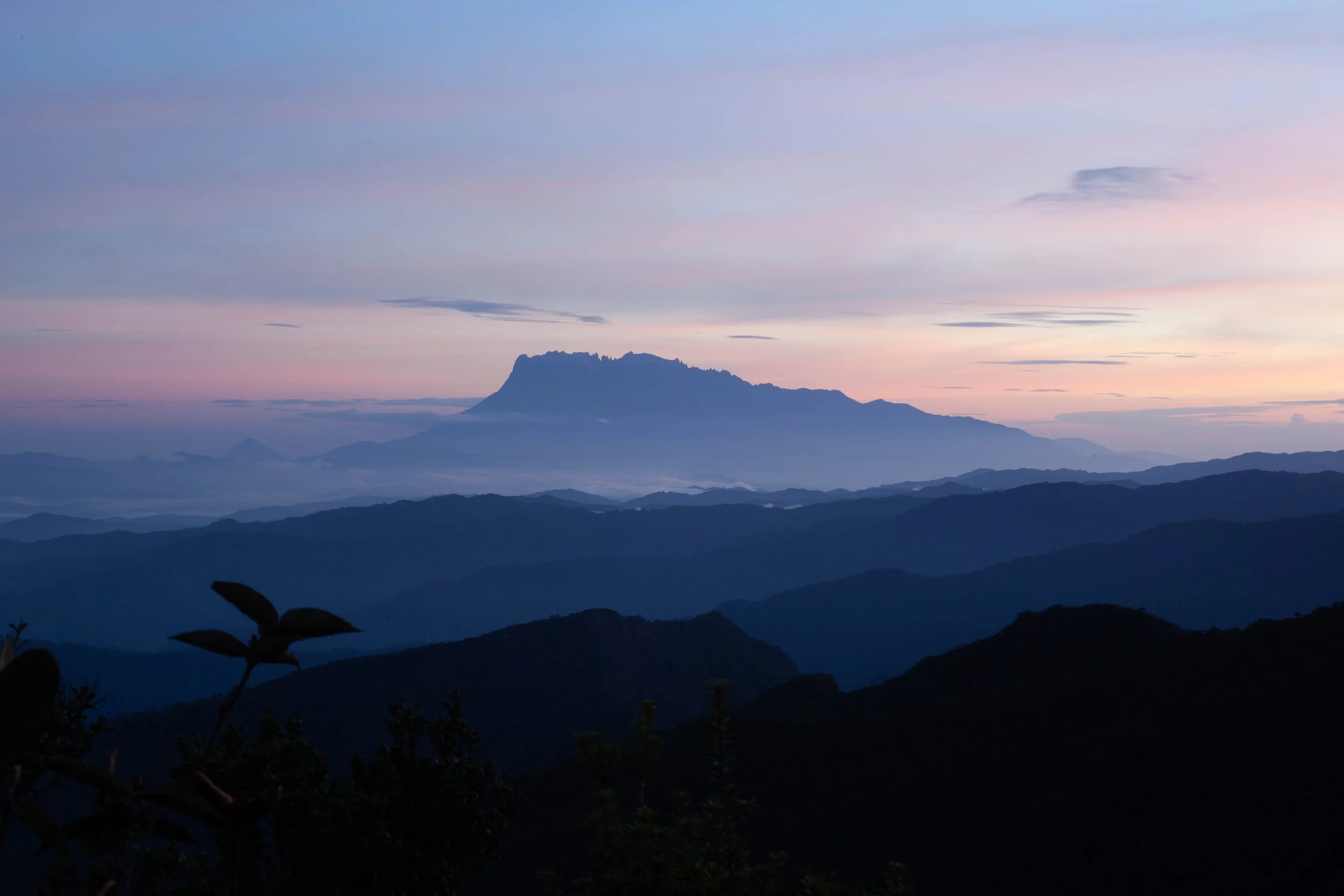
Ultramafic Montane Scrub
Ultramafic soils are composed of very low silica but high metal (magnesium and iron) content. Montane forests transition to low lying scrubs at a dramatically lower elevation on ultramafic soils. For example, montane scrub occurs as low as 1700m on the ultramafic soils of Mt Victoria, almost half the elevation it occurs at on Mt Kinabalu. Due to this, Nepenthes spp. growing on ultramafic soils tend to be far more exposed to wind, sun, and temperature extremes than their altitude may suggest. N. attenboroughii, N. peltata, and N. rajah are the species most known for growing in ultramafic montane scrub.
Lower Montane Forests
Lower montane forest generally occurs on the well-drained, lower slopes of mountains from 1250-1700. The canopy is usually uniform and at a height of around 30m tall, decreasing in height as elevation increases. Daytime temperatures are generally below 29 degrees and night above 14 degrees. Light levels at the ground are high enough to support shade tolerant species, and epiphytic species such as N. bongso and N. fusca take advantage of being closer to the light. Species here generally climb up to canopy level.
Heath forest
Mostly occurring below 1000m elevation (though high-altitude exceptions exist). Characterised by a sandy acidic substrate (to pH 4) and a consistent coverage of trees and palms that are 20m tall or shorter. Temperatures are stable in the 16-34 degrees Celsius range under the canopy but can become exceptionally hot where canopy is sparse. Nepenthes such as N. ampullaria, N. maxima, N. stenophylla, N. truncata, and N. veitchii are predominant species in this habitat.
Tropical lowland evergreen rainforest
Occurring from 0-1200m elevation, tropical lowland evergreen rainforest is characterised by large trees with a high, dense canopy. Temperatures are stable year-round within the 16-34 degrees Celsius range. Humidity and rainfall are also consistently high. Nepenthes do not generally grow on the forest floor due to the lack of light, but epiphytic species will occasionally be found growing near vegetation boundaries. Overall Nepenthes are not as common here as other habitats, but N. reinwardtiana, N. rhombicaulis, N. philippinensis and N. veitchii are the most likely species to be found.
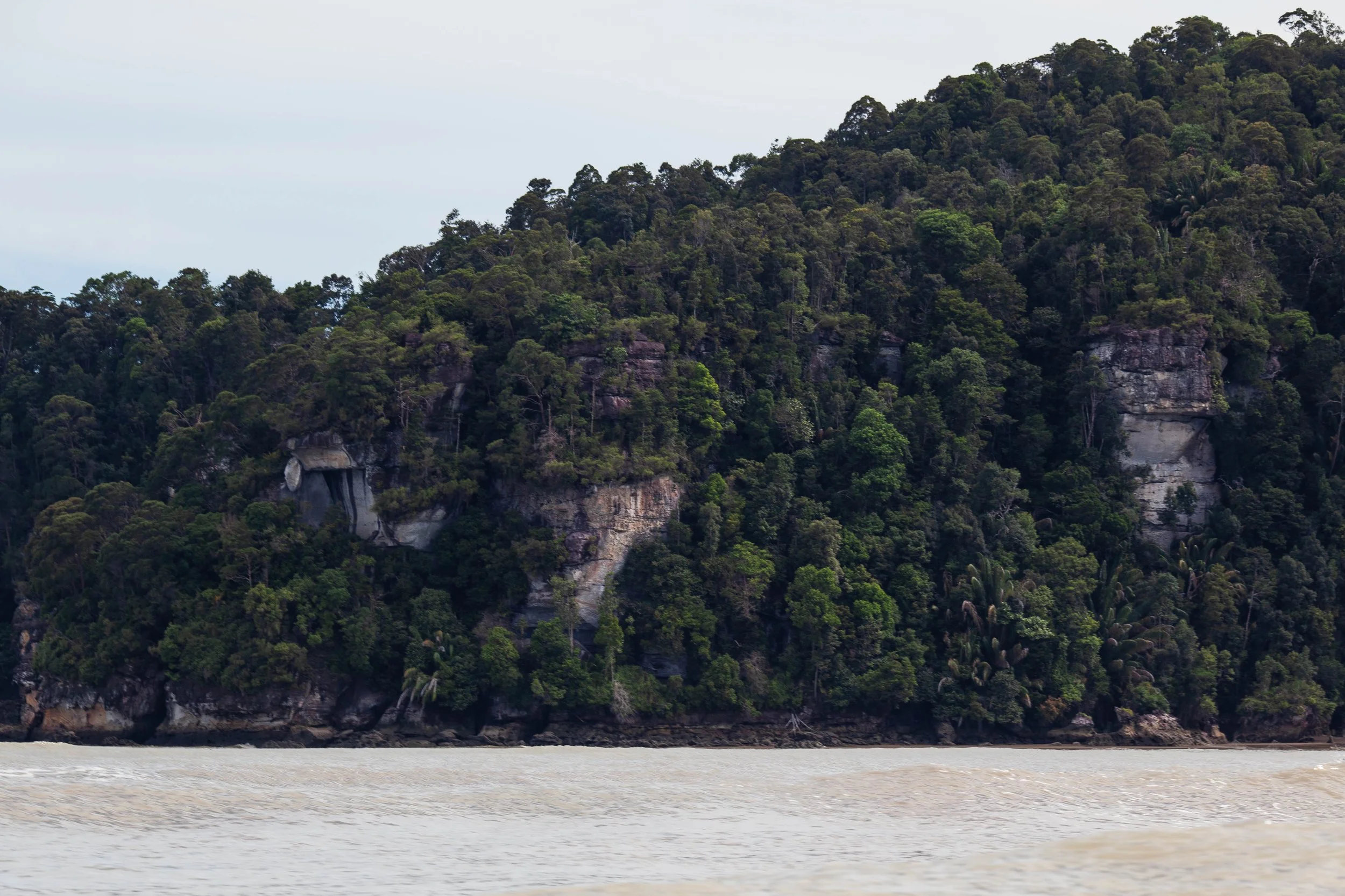
Cliff habitats
Incredibly variable and include multiple types rock such as limestone, sandstone, and granite. Nepenthes spp. may grow on the moist mossy areas, in crevices and gullies, and can grow with little to no substrate. Often, Nepenthes in this habitat will be subject to direct sunlight and temperature extremes (up to 38 degrees), and wind and rainfall unpredictability. When close to sea level, plants can overhang salt water (e.g. N. merrilliana, N. mirabilis, N. treubiana). Inland outcrops hundreds of meters above sea level: N. campanulata, N. clipeata, N. mapuluensis).
Peat swamp forests
Generally occurring at or close to sea level, temperatures are stable year-round within the 16-34 degrees Celsius range. Humidity and rainfall are also consistently high. The substrate is a thick layer of acidic (to pH 3) leached peat that is low in nutrients. The canopy is between 5-25 m tall but trees tend to be sparse, and the canopy lets through enough light to let Nepenthes grow on the ground. Species such as N. ampullaria, N. bicalcarata, N. gracilis, N. mirabilis, and N. rafflesiana occur widely in peat swamp forests.