
 Image 1 of 2
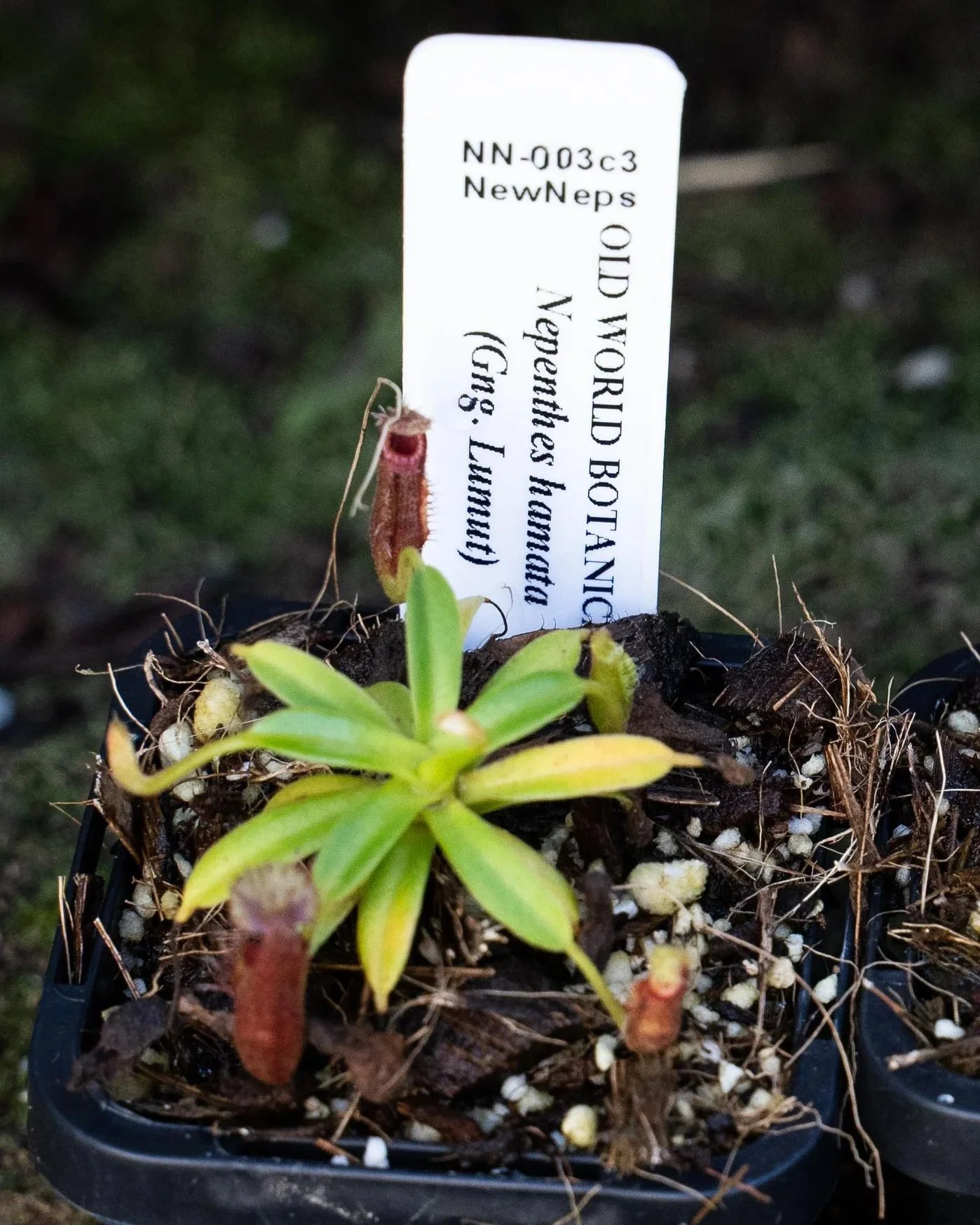 Image 2 of 2
Endemic to the Indonesian island of Sulawesi, Nepenthes hamata has been recorded primarily from the eastern portion of Central Sulawesi province (including large parts of the East Peninsula). There it grows, terrestrially or as an eoiphyte, in the lower and upper montane mossy forest and among scrub vegetation on mountain ridges and summits from 1,400-2,500m above sea level. In such habitats it experiences high relative humidity and often partially shady conditions.
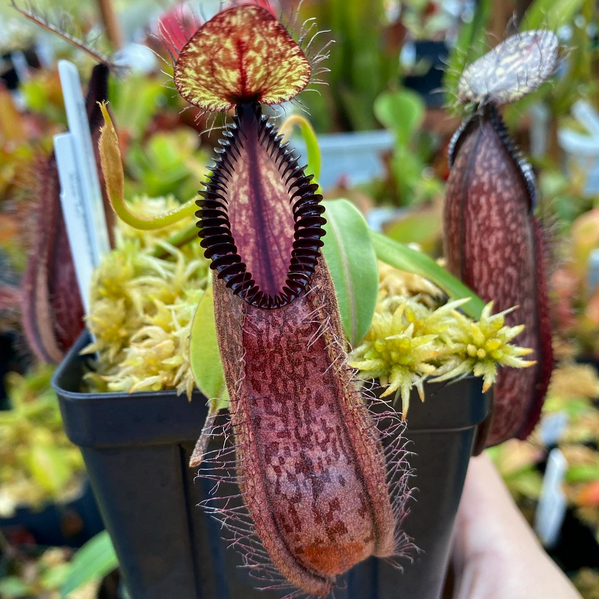
The specific epithet hamata is derived from the Latin word hamatus, meaning "hooked", describing the appearance of the highly developed peristome teeth of this species.
These plants are from a horticultural cross using the Wistuba N. hamata Gunung Lumut Clone 2 and a seed grown N. hamata Gunung Lumut from Carnivaro. N. hamata clones from Lumut are generally reported to be the most robust growers of all N. hamata available in cultivation, so I’m excited to see if this is further enhanced through breeding from parents also raised well in cultivation.
The first photo is an example of Wistuba N. hamata Gunung Lumut Clone 2 and the second is an example of a plant grown out for this sale to a XS size (68mm pot for scale).
Endemic to the Indonesian island of Sulawesi, Nepenthes hamata has been recorded primarily from the eastern portion of Central Sulawesi province (including large parts of the East Peninsula). There it grows, terrestrially or as an eoiphyte, in the lower and upper montane mossy forest and among scrub vegetation on mountain ridges and summits from 1,400-2,500m above sea level. In such habitats it experiences high relative humidity and often partially shady conditions.
The specific epithet hamata is derived from the Latin word hamatus, meaning "hooked", describing the appearance of the highly developed peristome teeth of this species.
These plants are from a horticultural cross using the Wistuba N. hamata Gunung Lumut Clone 2 and a seed grown N. hamata Gunung Lumut from Carnivaro. N. hamata clones from Lumut are generally reported to be the most robust growers of all N. hamata available in cultivation, so I’m excited to see if this is further enhanced through breeding from parents also raised well in cultivation.
The first photo is an example of Wistuba N. hamata Gunung Lumut Clone 2 and the second is an example of a plant grown out for this sale to a XS size (68mm pot for scale).